|
Japan moves
towards a debate on ending the death penalty
By Shane
Green,
December 2 2002
Early one
Wednesday in September Yoshiteru Hamada and Tatsuya Haruta received
the news they had dreaded: within hours they would die.
The convicted
murderers were among 50 prisoners on death row who had had their
sentences confirmed. There was perhaps time to write a letter or tidy
their belongings. And then to the gallows.
The day they
were executed was September18, the day after North Korea's Kim Jong-il
had stunned the Japanese Prime Minister, Junichiro Koizumi, by
admitting his agents had kidnapped 13 Japanese nationals, eight of
whom were dead.
Normally,
executions are carried out on a Friday with little media coverage. But
the saturation reporting of the kidnappings on this particular
Wednesday apparently made it too good an opportunity to miss.
"It was
quite unlikely the Government would be criticised in the media,"
said Makoto Teranaka, the secretary-general of Amnesty International
in Japan, which is campaigning for the death penalty to be abolished.
And that was
exactly what happened.
Yet in the past
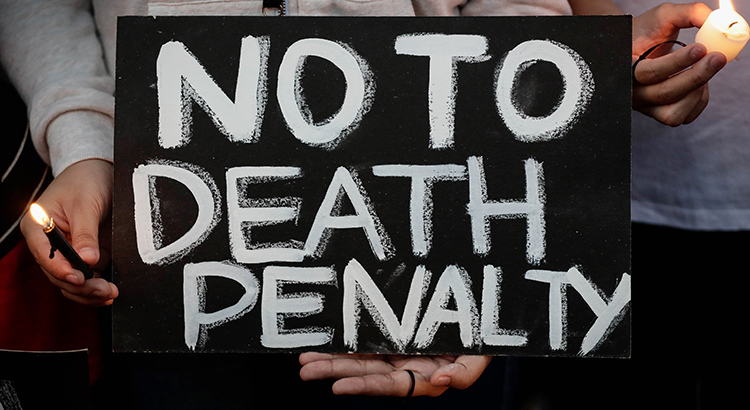
week things have started to change. The Japan Federation of Bar
Associations has called for a moratorium on the death penalty so the
nation can have a debate it has avoided.
In the Diet, the
national parliament, the 121 MPs who form its bipartisan League for
the Abolition of the Death Penalty will introduce legislation next
year to establish a commission to study the issue. The group is also
proposing the introduction of life imprisonment without parole to
replace capital punishment.
About 100
prisoners in Japanese jails have been sentenced to death, usually for
aggravated murder. Half have had their sentences confirmed.
The death
penalty is carried out on the order of the justice ministry, or, in
effect, whoever happens to be the justice minister. From 1989 to 1992
those who held the job exercised their own discretion and no one was
executed.
Then in 1993
seven prisoners went to the gallows. Since then anywhere between two
and six have been hanged each year.
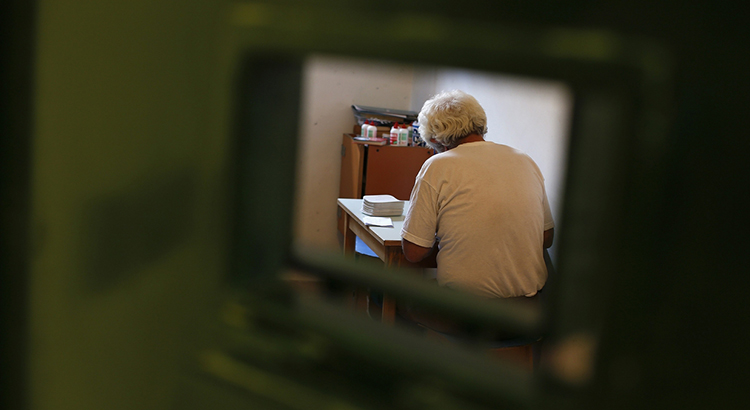
Life on death
row has its own miseries. Amnesty says visitors are restricted to
family. "It is quite nearly incommunicado detention," Makoto
Teranaka says. "This kind of isolation is itself a cruel
punishment or treatment."
Then there is
the uncertainty of who will be next. Sakae Menda, who was acquitted in
1983 after 30 years on death row, has told of the "constant dread".
His anguished outbursts led him to being handcuffed to a metal belt
around his waist for two months.
The Government
cites opinion polls that show strong public support for the death
penalty as a deterrent to serious crime.
But Professor
Nobuyoshi Toshitani of Tokyo Keizai University said he had rarely seen
academic papers that tried to prove the death penalty was a deterrent
. "I assume
many believe this, but we need to examine and discuss it at a national
level."
There is also
international pressure. The Council of Europe (not linked to the
European Union) has set a deadline of next month for Japan and the US
to make progress on the death penalty or lose observer status at the
council.
|