|
To Treat AIDS
IN AFRICA
Antiretroviral Treatment in Mozambique

Why Project DREAM?
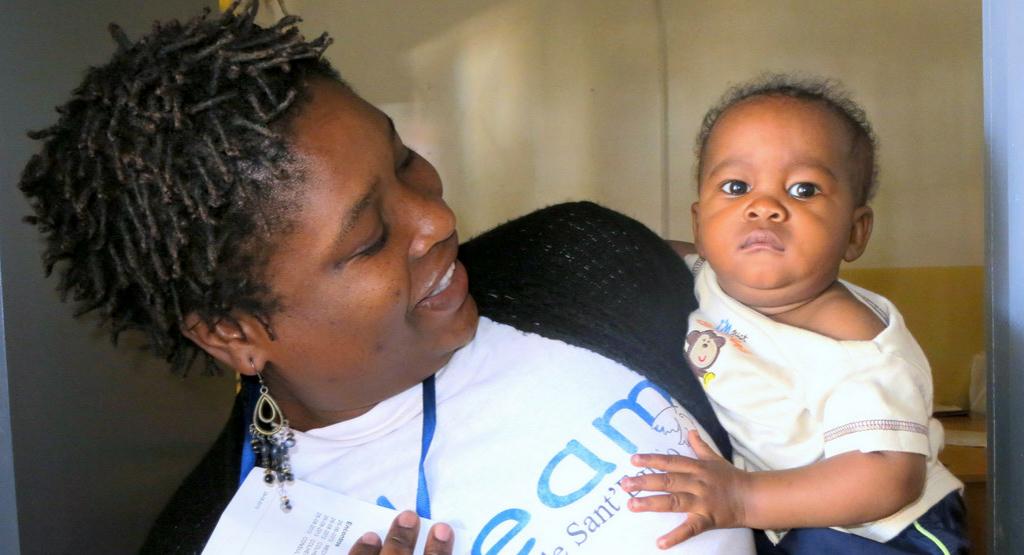
DREAM (Drug Resource Enhancement against AIDS in Mozambique) is a control, prevention, and treatment programme - in other words, a global programme to fight HIV infection in Mozambique.
DREAM: reflecting the vision and heart of the Community of Sant'Egidio
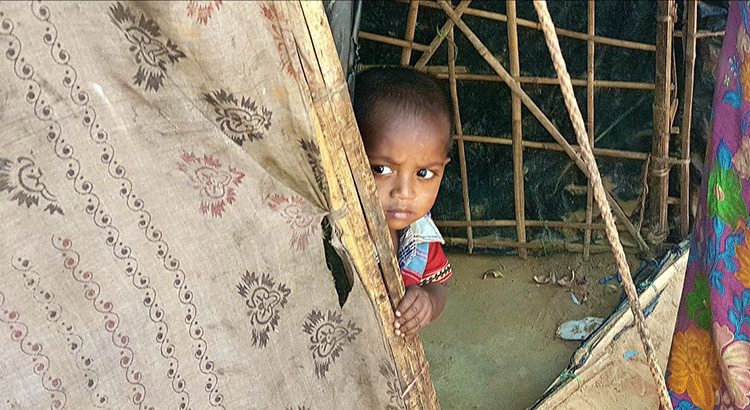
The Community of Sant'Egidio places central importance on the person and on each and every life. For many long years, an exclusively prevention-based strategy has been the paradigm of all large international agencies - and of the scientific community - for attacking AIDS in developing countries. This strategy has shown its limits: tens of millions of HIV positive Africans and the epidemic's alarming growth curve until at least 2010 require extraordinary effort to recover the lost time and, in the end, to allow prevention to be accompanied by therapy - or else the entire struggle against AIDS in the southern areas of the world will fail, and much of Africa, today and tomorrow, will disappear. The programme was therefore created with the objective of going back to bringing prevention and therapy together, in the conviction that we must save as well as prevent, gaining new time to live for as many people as possible.
DREAM: conceived for excellence
DREAM is committed to excellent care, diagnosis, organization and information. To this end, as described in the following pages, DREAM proposes employing state-of-the-art western standards and using routine evaluations of viral development and introducing the Highly Active Anti-Retroviral Therapy (HAART)-the current golden standard in HIV treatment -for every patient who needs it. For the Community of Sant'Egidio, people are never simply "emergencies" i.e. bodies to be clothed, sores to treat and mouths to feed: they are always people-always friends. Indeed, we operate according to that old and simple secret to do onto others, as we would have them do onto us. Who wouldn't want the same excellence? Such an approach is profoundly efficient; it provides great motivation for the personnel involved, earns maximum patient collaboration, makes patients promoters of knowledge concerning AIDS in the surrounding environment, eliminates the waste and interruption of therapy in progress, and augments the quality of care offered. In the area of AIDS, the minimalism in international aid and cooperation so often proposed risks resulting in perilous - if not outright lethal - consequences in an environment already exposed to too much weakness and in the face of a complexity that at root resists any sector-based or reductive approach.
DREAM: based on partnership
The Community of Sant'Egidio does not have the role of distant donor that, by its ownership, grants its funds and lets things be, seeing mostly to the financial reports. This is not a patronizing approach but rather a responsible one. Being able to work together provides yet another opportunity. Working together means supplying all the means necessary for achieving the objectives, in collaboration with - and with respect for - the local institutional framework. Thus, while hundreds of the Community's members are devoted to activities promoting the project in the West, more than 120 qualified volunteers - physicians, nurses, lab technicians, computer experts, educators, and administrators - work in rotation, with overlapping and direct transfer of knowledge, all year long, alongside the local personnel involved in the programme.
DREAM: a participatory programme
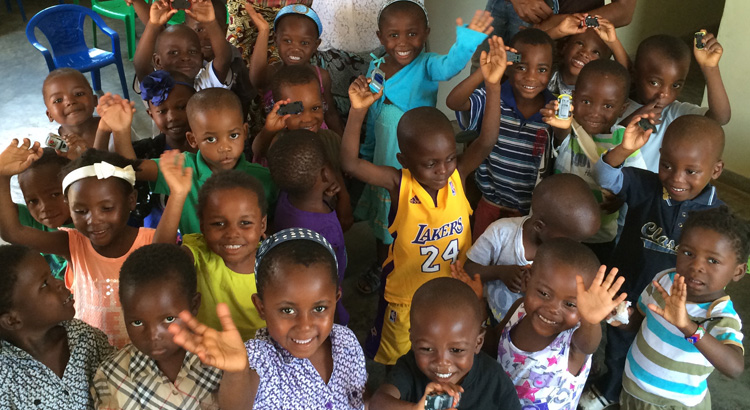
Although it was created only in the world's more industrialized nations, DREAM has a rock-solid social base in Mozambique, a country counting more than 60 Sant'Egidio communities, with five thousand youths and adults working alongside the most impoverished. Everyone lends a hand: no one is so poor as to be unable to help someone even poorer. These communities take active part in the programme in two strategic areas: health education and nutritional support. Tens of thousands of Mozambicans in the most deprived areas draw stable benefits from this daily activity. But DREAM is also open to participation from those living in the West. While scientific institutions and various subjects from the industrial and economic world have become stable partners in the programme, offering their scientific and economic resources, a large number of private citizens are also taking part in the programme, receiving detailed information and providing their support in many ways.
DREAM: well-adjusted for rapid scaling-up
Excellent services along with reduced economic resources have not posed a limit on the possibility of bringing treatment to a vast number of people and, on the horizon, to all. The main problem lies rather in the difficulty of implementing, in limited-resource healthcare systems such as those in Africa, the complex assistance required for HIV/AIDS. An innovative road in this field must be built, taking these special features into account and satisfying the need for light, agile facilities. DREAM has now shown itself to be a functioning model that must face the challenge of its growth. The issue is to broaden and spread all the system's aspects together, one alongside the other, from training technical and medical personnel (in a country, like most of sub-Saharan Africa, with a chronic shortage of personnel aggravated by the pandemic) to creating suitable infrastructures; from diagnostic facilities to suitable assistance in childbirth; and from monitoring and supervising therapies to evaluating the results. Coordinated, harmonious growth of the various components is critical and requires exceptional commitment, now and in the future. And in any event, the fight against AIDS must come to grips with this inescapable large-scale transit of therapies if it is to aim to become a nation-wide battle and, in the future, a model for limited-resource countries. Indeed, it is impossible to offer everything to everyone at the same time. This requires priority-setting. Thus, in the first phase, DREAM has given precedence to pregnant women, single mothers, and some key interventions in such strategic sectors of development as healthcare (physicians, nurses, and auxiliary personnel) and education (teachers at mandatory school). Programme directors have been frequently asked whether it is ethical to privilege one population segment over another. But unfortunately, the starting situation in much of Africa is that of non-choice accompanied by immobility, impotence, and total resignation before the expanding epidemic.
Not choosing in order to avoid the ethical risk of choosing the necessary priorities at the start of any programme with global ambitions (like those of containing, combating, and defeating AIDS in Africa) truly opens up the very opposite to the ethical risk, in a sort of ethical limbo that is responsible for the disappearance of entire generations.
This is why priority-setting introduces a starting ethic in a dramatically marked north/south imbalance.
DREAM has not forgotten other population sectors with difficulty accessing treatment, such as prison inmates or children in institutions. It is thus rapidly expanding in central and northern Mozambique.
DREAM: a public health programme
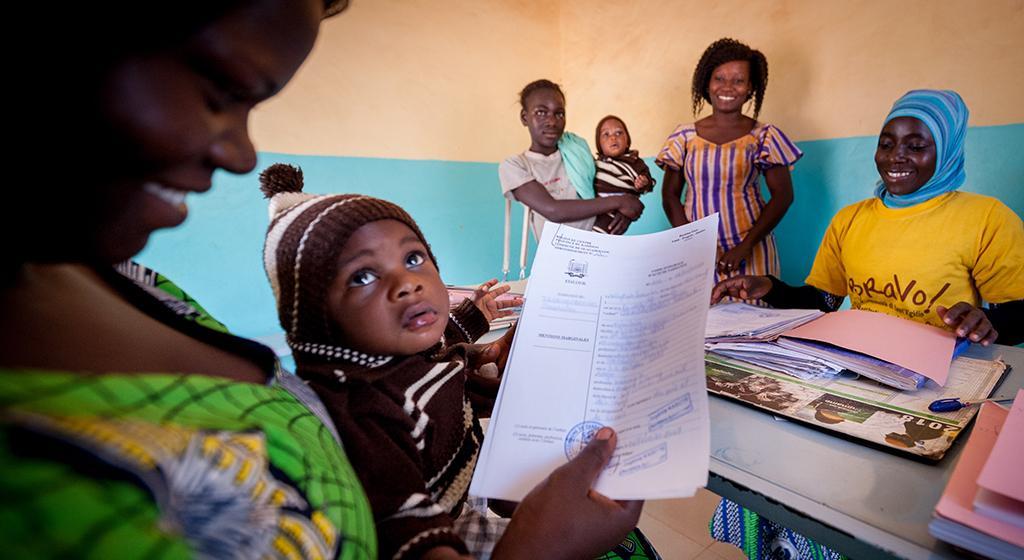
DREAM has been conceived to become a stable component of Mozambique's healthcare system. Its facilities - at hospitals, healthcare centers, and maternity wards - are those of the Mozambique healthcare system. And already in coming months, locations will also include private facilities of great public and social importance - managed by religious congregations, NGOs, and other solidarity agencies - which are already effective in helping scale up the programme. All healthcare services, from diagnosis to nutritional support, from health education to conventional therapy for opportunistic and sexually transmitted infections (like HAART) are offered completely free of charge, at least for the populations in the centers' user basins. The possibility is being studied of guaranteeing access to these services for those farther away geographically, and cost-sharing mechanisms based on out-of-pocket expenses have been proposed, to cover the costs of diagnosis reagents, for example.
DREAM: a research operation
DREAM is also used for the purposes of research in public healthcare, epidemiology of services and their impact, in clinics, and in therapy in developing countries. The acquisition of new knowledge in research dedicated to development interventions in impoverished countries cannot help but make a sound contribution on the road in the fight against AIDS. In this sense, the programme has strong connections with the scientific world and is oriented towards gathering data for epidemiological studies, both as routine and for ad hoc investigations. Much attention has been given to the need to give life - despite the obvious infrastructural weaknesses in a country large in size and with communication problems linked to its history and the aftermath of war - to an efficient internal communications system. A computerized, wired network unites all the country's centers and connects them to servers on site and in Europe, thereby facilitating the coordination and supervision work, allowing immediate remote consultation for DREAM clinics, and providing the data produced by the individual facilities in real time.
These pages were written for two reasons. The first is to provide simple, detailed information about the first steps and conquests of a programme that has shown convincingly - and against the grain - that AIDS can be defeated in Africa. The second is that DREAM aims to be an open channel for those who wish to take part in this engaging battle but lack the means to do so - a collector of energy and resources for all of Africa. And in fact, DREAM - and this is its last characteristic - needs everyone and is available to those who think they can expand it to other situations in the struggle against AIDS in Africa.
Defeating AIDS in Africa really is possible. It is our hope that awareness of this fact can become contagious, spreading among those who can multiply the effectiveness of this decisive battle for the future of Africa and of the whole planet.
Support from many people makes it possible to grow better and faster. And against AIDS, time is of the essence.
Even as these pages are printed, DREAM has been active for more than a year, and the first results were presented at the Tenth CROI (Conference on Retroviruses and Opportunistic Infections - Boston 2003).
|