|
Dallas Morning
News
TEXAS - Death sentence overturned for
foreign national
Court upholds decision to toss out
death sentence----Argentine laborer was convicted in 1995 Plano murder
A federal appeals court on Tuesday
upheld a district judge's decision to throw out a death sentence for
an Argentine laborer convicted of a 1995 Plano murder.
Former Texas Attorney General John
Cornyn had asked for a new sentencing hearing in 2000 for Victor
Saldano after a psychologist testified during sentencing that Mr.
Saldano was more likely to pose a danger, in part, because he was
Hispanic.
A U.S. district judge agreed last year
with Mr. Cornyn's intervention, ordering a new hearing.
Collin County District Attorney John
Roach had appealed the ruling, saying Mr. Cornyn should not have
intervened.
But in Tuesday's ruling, the U.S. 5th
Circuit Court of Appeals agreed with the lower court, finding evidence
that Mr. Cornyn's action "furthers the state's goal of ensuring
that capital sentencing is untainted by racial prejudice."
Mr.
Roach, the trial judge when Mr.
Saldano was convicted in 1996, could not be reached for comment
Wednesday. Mr. Saldano has confessed to killing 46-year-old Paul King
in 1995, when he abducted Mr. King, drove to a secluded road near Lake
Lavon, shot him five times and stole his wallet.
Dr. Walter Quijano, a clinical
psychologist from Conroe, had testified that one of the 24 factors
that made Mr. Saldano a greater threat to society was his Hispanic
background.
Court thwarts death sentence over race
issue
The 5th U.S. Circuit Court of Appeals
has sided with the Texas attorney general, thwarting an attempt to
reinstate a death sentence in a case that has drawn international
attention.
The 3-judge panel's decision blocked an
effort by Collin County District Attorney John Roach to restore Victor
Hugo Saldano's death sentence. The U.S. Supreme Court threw the
sentence out because Saldano's ethnicity was considered in the trial's
penalty phase.
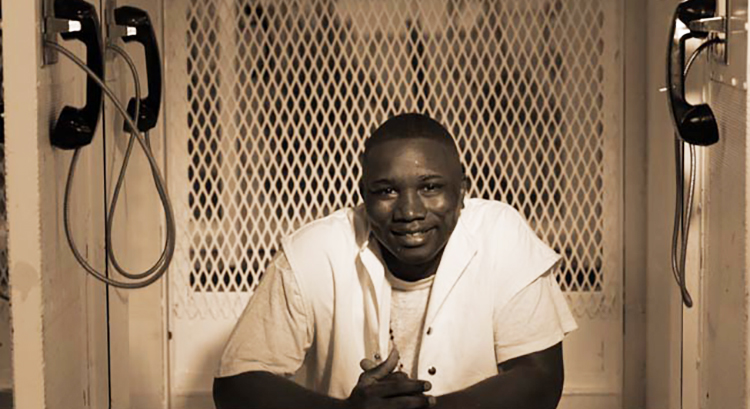
Saldano, 32, of Argentina, was
condemned for the 1995 abduction, robbery and shooting of Paul King in
that North Texas county.
The appeals court ruling reaffirms the
authority of Attorney General Greg Abbott and his predecessor, now
U.S. Sen. John Cornyn, to assert that testimony about Saldano's
ethnicity should not have been allowed.
Roach had sought to intervene in the
appeal.
"Simply because the district
attorney would have made a different decision does not mean that the
attorney general is inadequately representing the state's
interest," the court stated this week.
The court disagreed with Roach's
argument that his interests conflicted with the attorney general's.
"The fact remains that the
attorney general and the district attorney share an identical interest
in this case: to see that justice is done," the opinion states.
Stanley
Schneider, hired by the
Argentine government to represent Saldano, said, "No prosecutor
should be allowed to try and execute someone, using race as a possible
factor. To his credit, Mr. Abbott has taken a very strong position in
this regard."
A spokesman for Abbott's office
declined to comment. Roach did not respond to requests for comment.
Saldano's case drew widespread
attention in South and Central America, said attorney Scott Atlas,
hired by 5 Latin American countries and 6 civil rights organizations
to join in the case.
"The countries in Latin America
were quite offended by the notion that someone of Latin American
heritage was somewhat more likely to be a danger than someone not
Hispanic," Atlas said.
He was referring to testimony by
psychologist Walter Quijano in the penalty phase of Saldano's trial in
1996. Quijano said that Saldano's ethnicity could be a factor in
whether he posed a future danger, citing the over-representation of
blacks and Hispanics in the prison system.
A jury finding that a defendant poses a
future danger to society is one of the conditions for the death
penalty.
The Texas Court of Criminal Appeals
affirmed the sentence in 1999, but the U.S. Supreme Court agreed with
Cornyn in 2000 and threw it out.
"Because the use of race in
Saldano's sentencing seriously undermined the fairness, integrity or
public reputation of the judicial process, Texas confesses error and
agrees that Saldano is entitled to a new sentencing hearing,"
Cornyn wrote to the Supreme Court.
The high court's decision led to the
reversal of four other Texas death sentences and prompted the
Legislature to ban the use of racially charged testimony.
The Texas Court of Criminal Appeals
affirmed the death sentence again in 2002, but a federal district
court overturned the sentence and refused to allow Roach to intervene.
Roach then appealed to the 5th Circuit
Court. He has 14 days to seek a review by the 3-judge panel, the
entire court or the Supreme Court, Atlas said.

En Texas, EE.UU.
Revocaron la pena de muerte para Saldaño
El argentino tendría un
nuevo proceso
La
Corte Federal del Quinto Circuito de Nueva Orleáns, en los Estados
Unidos, confirmó la revocatoria de la pena de muerte impuesta al
argentino Víctor Hugo Saldaño, condenado en 1996 por la Corte Penal
del condado de Collin, a raíz del asesinato de un ciudadano
norteamericano.
La
Corte de Beaumont ya había fallado en favor de la revocatoria el 17
de junio de 2003, pero un fiscal de Collin había apelado la medida.
Finalmente, el miércoles último, una Corte Federal de Nueva Orleáns
ratificó que Saldaño no será condenado a muerte, al denegar la
apelación del fiscal y confirmar la sentencia revocatoria.
La
resolución de la Corte de Beaumont ordena que Saldaño debe quedar en
libertad, a menos que el estado de Texas, dentro de los 180 días
desde la emisión de la orden, disponga iniciarle un proceso de
sentencia o bien modificar la sentencia por la de prisión perpetua.
La
cancillería argentina emitió ayer un comunicado en el que analiza la
resolución de la Corte Federal de Nueva Orleáns como un triunfo de
los derechos humanos.
Discriminado por ser latino
Como
vale recordar, el proceso judicial seguido contra Saldaño fue
considerado "viciado de consignas discriminatorias" por el
abogado asesor de la familia del acusado, Juan Carlos Vega. Según el
abogado, las pruebas de la discriminación fueron "la composición
del jurado y el protocolo psiquiátrico, una especie de multiple
choice que incluía cuatro preguntas netamente racistas y también
el hecho de que el abogado defensor ni siquiera hablaba el idioma
castellano".
Esos
hechos fueron presentados ante la Convención Interamericana de
Derechos Humanos, en la causa "Saldaño contra los Estados Unidos".
Texas,
finalmente, sancionó la "ley Saldaño", que impide la
invocación de la raza en los procesos de pena capital en dicho estado.
Federal Court Blocks Texas Death
Sentence Over Racially Charged Testimony
Posted: April 5, 2004
The U.S. Court of Appeals for the 5th Circuit has blocked a Texas
District
Attorney's final attempt to restore the death sentence of Victor Hugo
Saldano, who was removed from Texas's death row in 2000 because of the
use
of racially charged testimony at his trial. The U.S. Supreme Court
ruled
that former Texas Attorney General John Cornyn was right to dismiss
Saldano'
s death sentence because it was based on state testimony encouraging
racial
bias.
La
Nation - Argentina
Estados
Unidos: revocan la pena de muerte para Víctor Saldaño El ciudadano
argentino había sido condenado en 1996 en fallo que contenía
consignas discriminatorias
Nuevamente
los tribunales de justicia de los Estados Unidos se pronunciaron en
favor de la revocación de la pena de muerte impuesta al ciudadano
argentino Víctor Hugo Saldaño, informó la Cancillería. .
Saldaño
había sido condenado a muerte en 1996 en un polémico fallo que
contenía consignas discriminatorias. . El 24 de marzo de 2004, la
Corte Federal del Quinto Circuito de Nueva Orléans denegó la
apelación del fiscal del distrito de Collin y confirmó la sentencia
revocatoria de la pena de muerte de Víctor Saldaño, dictada el 17 de
junio de 2003 por la Corte de Beaumont.
En
su parte resolutiva, la sentencia de 2003 ordena poner en libertad a
Saldaño a menos que el estado de Texas, dentro de los 180 días a
partir de la fecha de emisión de esta orden, disponga iniciar un
proceso de sentencia o cambiar su sentencia por prisión perpetua.
De
esta manera, se confirma la sentencia de la Corte de Beaumont, tras
más de cuatro años de esfuerzos de la Argentina.
Con
la confirmación del fallo del tribunal de Beaumont comenzará a
computarse el plazo de 180 días para que el estado de Texas decida
conmutar la pena o inicie un nuevo proceso en el que no se decidirá
sobre la culpabilidad de Saldaño en el homicidio, sino exclusivamente
sobre la pena correspondiente.
El
Clarin
EL
CASO DEL ARGENTINO VICTOR SALDAÑO
Fallo
a favor de un condenado a muerte
La
Justicia de los Estados Unidos volvió a pronunciarse a favor de la
revocación de la pena de muerte a la que había sido sentenciado el
argentino Víctor Hugo Saldaño por un asesinato cometido en ese país,
informó la Cancillería argentina.
"El
24 de marzo de 2004, la Corte Federal del Quinto Circuito de Nueva
Orleans denegó la apelación del fiscal del distrito de Collin y
confirmó la sentencia revocatoria de la pena de muerte de Víctor
Saldaño, dictada el 17 de junio de 2003 por la Corte de Beaumont",
informó la Cancillería, según la agencia Télam.
Así,
cobra vigencia la sentencia por la que se ordenó la libertad de Saldaño
a menos que el estado de Texas, en 180 días, inicie un nuevo juicio o
cambie su sentencia por prisión perpetua.
|