|
|||
|
|
|||
|
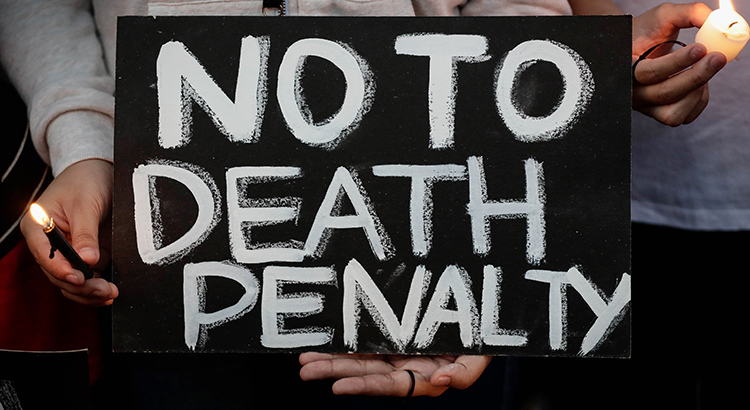
Deuxieme congres mondial contre la peine de mort MONTREAL, 4 oct - Montreal accueille de mercredi a samedi le deuxieme congres mondial contre la peine de mort, une manifestation qui compte bien notamment denoncer les executions capitales aux Etats-Unis voisins, moins d'un mois avant l'election presidentielle americaine. Avocats, militants, diplomates, universitaires, responsables d'ONG, elus ou celebrites comme Bianca Jagger, l'actrice francaise Catherine Deneuve et le Finlandais Ari Vatanen, depute europeen et ex-champion du monde de rallye automobile, doivent participer a des conferences, debats ou tables rondes qui culmineront samedi avec une manifestation contre la peine capitale dans les rues de la metropole quebecoise. Vetus de noir, quelque 3.500 militants y symboliseront le nombre de condamnes attendant dans les couloirs de la mort aux Etats-Unis, selon les organisateurs. A ce congres qui veut "sensibiliser l'opinion internationale et creer une caisse de resonance mondiale pour dire non a la peine de mort", seront lus des messages du pape Jean-Paul II et d'hommes politiques comme le president francais Jacques Chirac, selon le programme. Examens de la situation continent par continent ou temoignages d'anciens condamnes se succederont au congres qui se demandera notamment comment agir dans les democraties n'ayant pas encore aboli la peine de mort: "l'Inde, les Etats-Unis, Taiwan, la Thailande et le Japon". Exposition, concert ou projections de film sont egalement prevus a ce congres dont la premiere edition s'etait tenue en 2001 a Strasbourg, dans l'est de la France. Le congres est organise par Ensemble contre la Peine de mort (ECPM), une association basee a Paris dont le president est l'ecrivain Michel Taube, et par Penal Reform International (PRI), une ONG creee a Londres, dont le but est de faciliter dans le monde l'adoption de reformes penales, incluant les normes des droits humains.
MONTREAL _ The first wife of Rolling Stones singer Mick Jagger opened an international conference on abolishing the death penalty Wednesday by calling U.S. President George W. Bush a threat to world peace. The three-day Second World Congress Against the Death Penalty, which was first held in Strasbourg, France in 2001, gathers hundreds of participants with the goal of urging countries to ratify a U.N. protocol against the death penalty. Although nonbinding, the protocol signed by over 50 countries would be an important step toward eliminating capital punishment, organizers say. <I think President Bush is in my view, if I may say so, the most dangerous man in power today,> Bianca Jagger said. <There is a threat not only for the people of the United States but if he is elected, I feel it would be a threat for the world and would unfortunately put us in a position where we will be confronting the possibility of a third world war,> Jagger said. Jagger, who is a goodwill ambassador for the Council of Europe, said she appealed in 2000 to the former Texas governor to block the execution of a man who was imprisoned when he was 17. When he refused, she witnessed the execution along with the man's family and other death penalty opponents. The council monitors human rights and democracy in more than 40 countries. <The execution of a condemned man is barbaric,> she told conference delegates. <The execution of an innocent man is murder.> The 59-year-old Jagger said living in Nicaragua under a dictatorship taught her the meaning of oppression. Amnesty International says 1,146 people were executed last year in 28 countries and more than 2,756 were sentenced to death in 63 countries. The United States and Japan are listed as the only democratic countries to execute more than one death row inmate every year and the United States is among three countries that execute minors. According to Amnesty International, some 38 child offenders _ people under 18 at the time of the crime _ were executed worldwide since 1990, half of them in the United States. Next week the U.S. Supreme Court will review whether convicted juveniles should face the death penalty. Event organizer Michel Taube said Montreal was chosen in part because of its proximity to the United States, a country where he said <the death penalty is not the subject of a major societal debate.> High-profile attendees include former U.N. High Commissioner for Human Rights Mary Robinson and French actress Catherine Deneuve. During the conference are to focus on issues such as the death penalty in the face of terrorism and whether there should be a boycott of the 2008 Olympics in Beijing because of China's record on executions. Conference organizers also want countries to pass laws that prevent the extradition of citizens to states where they face the death penalty and to welcome refugees who face it in their own country. So far 80 countries have completely abolished the death penalty while 78 continue to execute people. Others may allow capital punishment, but not routinely apply it. |
|||