News

Print

Uzbekistan-Detention Death

TASHKENT, Uzbekistan _ An Uzbek man serving a 17-year prison sentence for religious extremism was  tortured to death, his sister said Monday. Authorities said he suffered a  stroke, but said an investigation into his death had been launched.

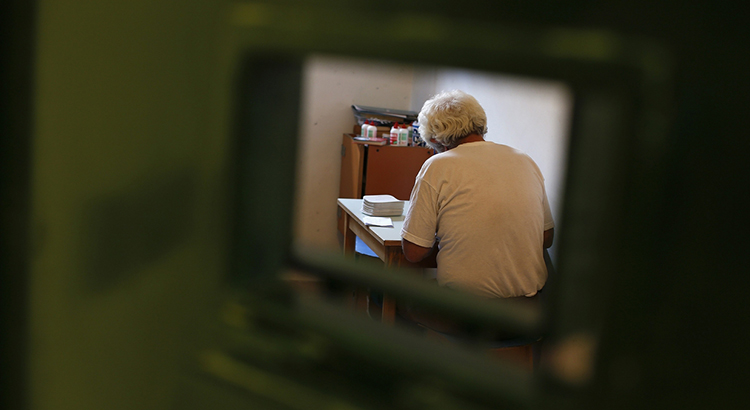
   Samandar Umarov, 35, was convicted of belonging to the outlawed Islamic  party Hizb-ut-Tahrir in 2000 and had been serving his sentence at a prison  in the central city of Navoi, some 500 kilometers (310 miles) from the capital, Tashkent.

   His sister, Yashnar Umarova, said that when her brother's body was brought to her Monday, his fingernails and toenails appeared to have been torn off.

   Svetlana Artikova, a spokeswoman for the Prosecutor General's office, said that a preliminary autopsy suggested Umarov suffered a stroke. She said officials present at the autopsy reported that his fingernails and toenails were in place during and after the post-mortem, she said.

   Artikov said prosecutors have opened an <additional> investigation into Umarov's death but did not explain why.

   Surat Ikramov, of the Independent Human Rights Initiatives group, said he believed torture was involved in Umarov's death after talking to his relatives.

   Uzbekistan has long drawn criticism from domestic and international groups for torture and human rights abuses.

  At least two deaths in Uzbek custody were reported last year. Since May 2003, four other suspicious deaths have been documented by the New York-based Human Rights Watch.

   A U.N. envoy who visited the former Soviet republic in 2002 found that torture was <systematic> in Uzbek jails.

   In 2002, human rights groups reported that two inmates at the country's most notorious prison were boiled alive.

   Uzbek officials claimed the men died in a prison fight and were scalded when a teapot was thrown at them.

    The banned Hizb-ut-Tahrir, which originated in the Middle East and whose Arabic name means Party of Liberation, claims to disavow violence in its quest to create a worldwide Islamic state. It is banned in Uzbekistan and Kyrgyzstan and as of February 2003 in Russia, where it is branded a terrorist organization.

    Uzbek President Islam Karimov has accused Hizb-ut-Tahrir of inspiring attacks in March, April and July that included assaults on police and suicide bombings at the U.S. and Israeli embassies in Tashkent.

   Hizb-ut-Tahrir has denied responsibility for the attacks, which killed more than 50 people, most of them alleged assailants.

 Critics of the Uzbek government say the embassy attacks were inspired by the authorities' crackdown on Muslims who practice Islam outside of state-controlled mosques. Rights groups say  thousands of devout Muslims have been jailed in Uzbekistan in recent years.