|
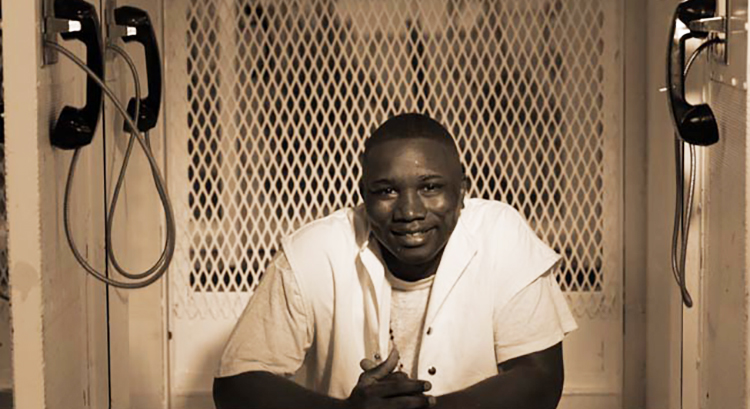
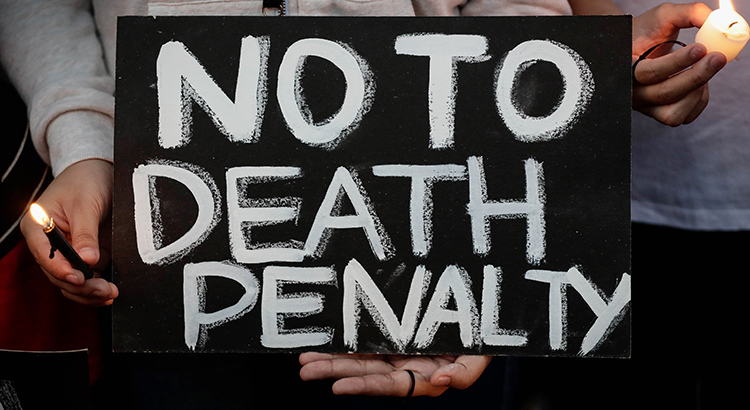
News & Observer & Rick Halperin NORTH CAROLINA - N.C. executes nation's 1,000th inmate since '76----Kenneth Lee Boyd, sentenced to die by lethal injection, spends final night in Central Prison North Carolina's execution of Kenneth Lee Boyd this morning would have happened quietly, but numerical circumstance made him the 1,000th inmate put to death in the United States since capital punishment resumed. The number brought international attention to Raleigh's Central Prison. A jury sentenced Boyd to death for killing his estranged wife and father-in-law in 1988. 2 of the victims' relatives planned to watch as prison officials injected a series of lethal drugs into Boyd's veins; others had said he deserved to die for his crimes. As the 2 a.m. death hour approached, hundreds of death penalty opponents protested outside the prison and about 20 were arrested. National leaders in the anti-death penalty movement spoke to the crowd. Reporters from international wire services and local television stations alike were on hand. THE CRIME: Prosecutors say Boyd went on a rampage inside the Rockingham County home. They say he stalked his estranged wife through the house, shot her 9 times, pausing to reload. 2 of his sons witnessed the slayings of their mother and grandfather. ONE RELATIVE'S PERSPECTIVE: Boyd's brother-in-law, Craig Curry of Stoneville, says he believes Boyd deserves to die for his crimes. Curry was in the house that night, witnessed the slayings and was threatened and shot at by Boyd. PLEA FOR MERCY: Boyd's lawyer, Thomas Maher of Chapel Hill, argued the execution should not happen because the crime was out of character for Boyd, whom he described as a soft-spoken Vietnam veteran with no previous criminal record. At the time of the killings, Maher said, Boyd had been drinking and was struggling with the failure of his marriage. Maher had filed last-minute appeals based on claims of juror misconduct and bias. STATE'S RESPONSE: State prosecutors argued that Boyd's execution should not be delayed because of the unproven allegations, some of which Boyd's lawyers learned about years ago but didn't raise until the last minute. NEXT EXECUTION: Perrie Dyon Simpson, 43, is scheduled to be executed Jan. 20 at Central Prison for the 1993 murder of the Rev. Jean Ernest Darter in Rockingham County. The night before the killing, Darter had let Simpson and his pregnant girlfriend into his home because they were hungry, court records say. Darter fed them some peaches and cake and gave them $4, records say. The next night, Simpson came back and strangled Darter. Former North Carolina death row inmate Alan Gell was among the protesters, wearing a red T-shirt that said: "Innocent. N.C. Department of Correction Death Row." He told those gathered that he was friendly with Boyd in prison. "I want to hope and pray that Kenneth Boyd be not remembered as the 1,000th person executed. I hope he is remembered as Kenneth Boyd -- not a number, but a human being," said Gell, who was acquitted of a murder charge after a retrial. Boyd, 57, was thrust into this spotlight Tuesday when Virginia Gov. Mark R. Warner granted clemency to Robin Lovitt, who had been scheduled for execution Wednesday. With that decision, Warner sent the death penalty protesters and media attention south along Interstate 95. News accounts about the anticipated 1,000th execution appeared on Agence France-Presse, a French wire service; China Daily, a national English language newspaper; and the Guardian in London. On Thursday, Boyd visited all day with one of his sons. At 5 p.m., he ate his last meal: a medium-well New York strip steak, a baked potato with sour cream, a roll with butter, a salad with ranch dressing and a Pepsi. At close to 6 p.m., the U.S. Supreme Court rejected Boyd's last legal appeals based on claims of juror misconduct and bias. At 10 p.m. Thursday, Gov. Mike Easley denied Boyd's request for clemency. "I find no compelling reason to grant clemency and overturn the unanimous jury verdicts affirmed by the state and federal courts," Easley said in a statement. The protesters lined Western Boulevard holding candles and signs as a slight rain fell and the temperature dropped to 45 degrees. One held a large white cross. Another held a large yellow peace sign. At the end of the sidewalk stood a hangman's gallows. At 11:27 p.m., about 20 protesters tried to get to the prison to stop the execution. The group dashed past the line of officers standing guard at the top of the prison's driveway. A few got as far as 15 feet down the driveway. As police stopped them, other protesters clapped, cheered and sang "We Shall Overcome." Police soon handcuffed the arrestees and loaded them into a bus and a police van for the ride to the Wake County jail. The protest marked a moment that took almost 3 decades to arrive. In 1972, the U.S. Supreme Court struck down the death penalty as unconstitutional, ruling that states meted out the punishment arbitrarily. 4 years later, the court validated several states' rewritten death penalty laws. Executions resumed in January 1977 when a Utah firing squad killed Gary Gilmore. North Carolina's first execution was in 1984, when James W. Hutchins died for killing three law officers. Almost 1,500 people died at the hands of the inmates executed during the past 28 years, according to the Death Penalty Information Center. The 1,000th execution occurred amid national debate over capital punishment. Fewer killers are being sentenced to death and fewer are being executed. Some states have been roiled by evidence that innocents end up on death row. "Jurors are starting to question the death penalty," Boyd's lawyer, Thomas Maher of Chapel Hill, told those gathered Thursday evening. By 2001, a slim majority of Americans -- 53 % of people questioned in a Gallup poll -- said they supported a moratorium until the administration of the death penalty could be evaluated. Illinois passed a moratorium on the death penalty in 2000 after 13 convicted men were exonerated. For several years, North Carolina has been debating a two-year moratorium on executions. That campaign has so far faltered. The state Senate approved a moratorium in 2003, but it never came up in the House. This summer, a moratorium bill again failed to get a vote on the House floor. Instead, House Speaker Jim Black, a Democrat from the Charlotte area, appointed a 22-member committee to consider whether the death penalty is being applied fairly in North Carolina. It meets for the 1st time Dec. 19. "My hope is to recommend some changes in the law to make the capital punishment process more fair, minimize the chances of any innocent person getting caught up in it and look at issues of proportionality and racial discrimination," said Rep. Joe Hackney, a Chapel Hill Democrat and committee co-chairman. Branny Vickory, president of the N.C. Conference of District Attorneys, which opposed the select committee's creation, questions what more needs to be studied. Vickory points out that prosecutors supported past changes to the system -- outlawing the death penalty for the mentally retarded and having prosecutors agree to share all their evidence and open their files to defense lawyers before trial. "We're running around in a lot of different directions, looking at the procedures, when the real issue is whether we want a death penalty," said Vickory, the prosecutor in Wayne County. The General Assembly will take up the committee's recommendations when it reconvenes in spring. Meanwhile, the United states will leave Boyd's landmark death behind quickly. The 1,001st execution is set today in South Carolina. Shawn Humphries, who killed a store clerk, is scheduled to die at 6 p.m. Boyd becomes the 5th condemned inmate to be put to death this year in North Carolina and the 39th overall since the state resumed capital punishment in 1984. Boyd becomes the 56th condemned inmate to be put to death this year in the USA and the 1000th overall since the nation resumed executions on January 17, 1977. The Daily Tar Heel It’s just a number - As we move past America’s 1,000th execution, there should not be any special consideration given simply because of a bigger number. This morning, the 1,000th execution since the reinstatement of the death penalty took place in our home state. But the roundness of the number doesn’t make it more deserving of special attention than any other execution. Admittedly, the eyes of the world were on North Carolina to see if we would follow through with the execution of Kenneth Lee Boyd. Boyd has never denied committing the murders of which he was convicted, making his a poor case on which death penalty opponents could have pinned their hopes for change. And quite frankly, it doesn’t matter what European countries think of our capital punishment system. North Carolinians favor the death penalty over life without parole more than two to one, according to an Elon University poll. And who is better qualified to make decisions about how to hand down righteous retribution in our state than those who live here? In the past, this editorial board has supported capital punishment as it is meant to be carried out - against the most diabolical murderers and rapists our society has to offer. But there is also an important corollary to that stance. North Carolina has come under fire in the recent past about the fairness of its justice system when it comes to capital offenses. The Alan Gell case is a good example. During Gell’s initial trial, the prosecution withheld evidence that would have exonerated a man we now know to be innocent. As a result, Gell spent years rotting in a cell for a crime he did not commit. A two-year moratorium would allow North Carolina to review the cases of its current death row inmates to more confidently ensure that nothing was blatantly mishandled. But, in the case of today’s history-making occasion, there is no evidence to suggest that there was mismanagement by the system. As a result, Gov. Easley was right not treat this case with special consideration. With 23 executions to date under Easley, he has granted clemency only twice. While our state needs to make sure that its judicial affairs are in order, the media and the rest of the world need to get over the fact that this is execution number 1,000. After all, it’s just a number. The Charlotte Observer GOVERNOR REJECTS KILLER'S PLEA FOR CLEMENCY The 1,000th execution - N.C. man was to receive lethal injection; U.S. total dates to 1977 A man who killed his estranged wife and father-in-law awaited lethal injection early today in the nation's 1,000th execution since capital punishment resumed in 1977. Hours after the U.S. Supreme Court rejected Kenneth Lee Boyd's final appeal Thursday evening, Gov. Mike Easley denied Boyd's clemency request, clearing the way for his execution at 2 a.m. today. "Having carefully reviewed the facts and circumstances of these crimes and convictions, I find no compelling reason to grant clemency and overturn the unanimous jury verdicts affirmed by the state and federal courts," Easley said in a statement. On Thursday, death penalty protesters from around the country flocked to Raleigh to try to stop N.C. officials from executing the 57-year-old Rockingham County man. "(Execution) is a shameful thing when the world and this country are moving away from the death penalty," said Sheila Stumph, who held up a picture of Boyd during a noon Thursday protest in front of Easley's State Capitol office. Protesters rode a bus from Washington, D.C., and flew in from California, Texas and other states to join N.C. protesters at a vigil outside the prison. Reporters from Canada, France and Poland covered the event. But death penalty supporters have backing in North Carolina. Boyd shot and killed his father-in-law, Thomas Dillard Curry. He then shot his wife, Julie Curry Boyd, 9 times, killing her. He also turned the gun on a brother-in-law who survived the shooting. "The evidence of Boyd's guilt was overwhelming.... He bragged to the police afterward and recounted in detail how he shot his way into the house..." wrote Danielle Marquis, an N.C. special deputy attorney general, in a court filing this week. Also, an Elon University poll last month found 61 percent of N.C. voters support the death penalty for convicted 1st-degree murderers. The attention to the N.C. case comes just as the state is taking steps to examine whether capital cases and death row appeals are handled in the right way. A committee of N.C. House members will meet later this month to start examining whether the state is fair in how it conducts trials in capital cases and in who it assigns to death row. The state Senate has voted several times to suspend executions while the state studies their fairness, but House supporters of a 2-year moratorium have never been able to garner the votes. The case last year of Alan Gell, who spent nearly a decade on death row before a 2nd jury exonerated him, inspired the state's death penalty critics. "I feel confident we're going to find some issues," said Rep. Beverly Earle, D-Mecklenburg, who co-chairs the House committee. She said of her fellow House members: "I just hope they'll be willing to deal with the issues and put their bias to the side." N.C. Ranks 7th As of Thursday, North Carolina has had 38 executions since the Supreme Court reinstated the death penalty in 1976. This state ranks seventh among the 50 states, but far behind top-ranked Texas' 355. South Carolina, which has the execution of Shawn Paul Humphries slated for this evening, was eighth in executions with 34. Humphries was convicted of killing Dickie Smith during an attempted convenience store robbery in 1994. |